
Don’t fry your devices! Our International Travel Plug Adapter Guide instantly protects your expensive mobile tech from costly damage in foreign outlets.
Traveling internationally is an exhilarating experience, but nothing kills the vibe faster than a dead phone or a fried laptop. Many travelers believe that if a plug fits into a wall outlet, it’s safe to use. However, without a proper International Travel Plug Adapter Guide, you are risking permanent damage to your expensive electronics. Whether you are navigating the narrow streets of Rome or the neon lights of Tokyo, understanding how to power your devices safely is the most critical part of your packing checklist. In this comprehensive guide, we will break down everything from plug shapes to voltage protection to keep your gear running smoothly worldwide.

Voltage and Frequency Considerations
The biggest mistake travelers make is failing to understand the difference between a voltage converter and a standard unit found in an international travel plug adapter guide.
Difference Between a Plug Adapter and a Voltage Converter
- Plug Adapter: This changes the shape of the pins so that your charger can physically fit into a foreign wall socket.
- Voltage Converter: This actively changes the electrical power (for example, stepping 220V down to 110V) to match what your device needs.
Safe Charging Tips
The standard voltage in the USA is 110-120V, whereas in Europe and Asia it is 220-240V.
- The Risk: If you plug a 110V-only device (like an American hair dryer or straightener) into a 220V socket without a converter, it will overheat, spark, catch fire, or suffer permanent damage.
- Check First: Always inspect the tiny text on your charger brick for the phrase “Input: 100-240V”. If you see this, your device is “Dual-Voltage”, and you only need a simple, inexpensive plug adapter.
🌍 How World Travel Adapters Address Global Plug Compatibility Challenges
The world is divided into 15 different physical plug types, making international transit a massive hurdle for electronics. Modern universal travel adapters solve these global compatibility challenges by utilizing a retractable sliding rail system. These all-in-one compact cubes house built-in prongs for the world’s most common configurations:Type A (USA/Japan), Type G (UK/Dubai), Type C (Europe), and Type I (Australia/China). With a single click, the correct slider pops out, allowing solo travelers to transition seamlessly between completely different power grids without carrying a bag full of loose plastic pieces.
However, referencing a high-quality International Travel Plug Adapter Guide helps you understand that modern compatibility isn’t just about the physical pins; it’s about connection stability and power delivery. Advanced world travel adapters address these contemporary infrastructure challenges by integrating Gallium Nitride (GaN) technology. That enables significantly smaller, more energy-efficient cube designs that easily support multiple high-speed USB-C ports. As a result, travelers can safely handle high-wattage charging demands while effortlessly adapting to the physical plug shapes in over 150 countries worldwide.
🛒 Top 5 Recommended Travel Adapters for 2026
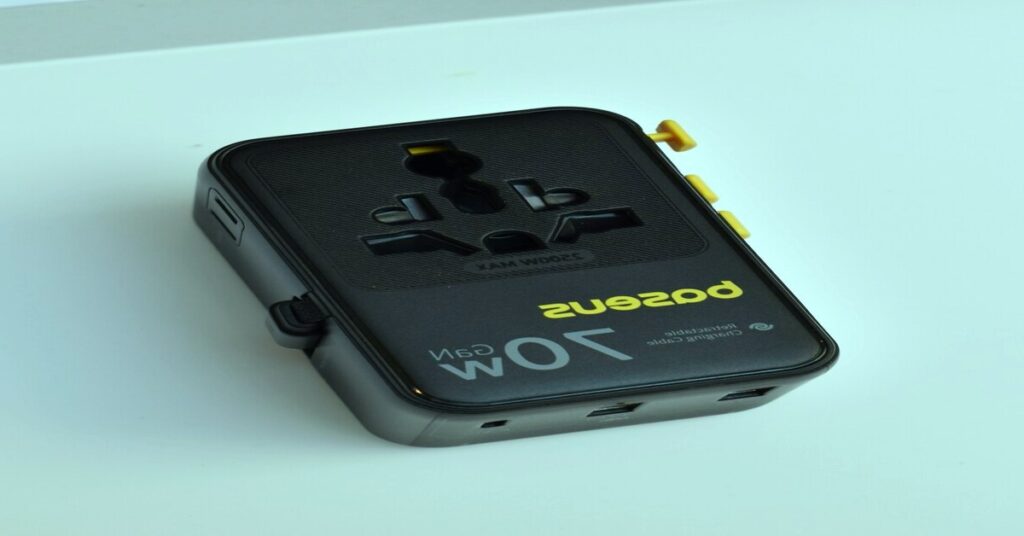
When traveling with thousands of dollars in tech, relying on cheap counterfeit wall plugs is a massive gamble. The curated hardware options below have been thoroughly vetted for superior voltage protection, structural safety, and high-speed energy delivery across varying global power grids.
1. The Best Overall: EPICKA Universal Travel Adapter
If you are tired of carrying multiple charging bricks, finding a reliable international travel plug adapter guide is the first step. Selecting a certified device eliminates the frustration of loose wall sockets and mismatched voltage grids. A premium power hub ensures your expensive electronics receive safe voltage on your global journey.
- Best for: iPhone, MacBook, and multi-device owners requiring unified high-speed charging.
- Consolidate your heavy charging bricks into a single, pocket-sized GaN cube that effortlessly safe-charges up to six individual devices across 160+ countries simultaneously.
2. The Heavy-Duty Choice: BESTEK 250W Power Converter
Plugging electronics into the wrong voltage grid can permanently ruin your gear abroad. Verifying your destination’s specific outlet shape and voltage standard ensures you choose a unit capable of safely handling heavy electrical loads, protecting your essential devices wherever you go.
- Best for: North American solo travelers utilizing high-wattage 110V-only appliances like hair straighteners or medical CPAP machines.
- Warning: A standard plastic adapter will permanently fry a 110V American appliance on a 220V grid. Use this certified step-down transformer to guarantee active defense for high-end styling tools and medical gear.
3. The Minimalist Set: Ceptics World Travel Adapter Kit
A premium international travel plug adapter guide helps you avoid loose wall connections during critical work trips. Choosing a rock-solid, certified adapter prevents sudden power disconnections and keeps your business devices charging reliably in crowded foreign boardrooms.
- Best for: Corporate business travelers needing an absolute wiggle-free, secure structural connection.
- Retractable sliding cubes are notoriously heavy, causing them to sag and pull loose from shallow hotel sockets. These individual, dedicated regional attachments lock flush against the wall for an uninterrupted connection.
4. The European Specialist: TESSAN European Plug Adapter
Verifying your destination’s specific outlet shape ensures you pack the exact prongs needed for European wall sockets, enabling seamless, fast charging across the continent.
- Best for: Vacationers focusing their entire itinerary on the EU zone, including Italy, France, Spain, and Germany.
- Boutique European hotel rooms are infamous for providing only one open wall socket. This ultra-slim power block instantly expands a single local outlet into three standard US ports and three high-speed USB paths.
5. The Budget Backup: NEWVANGA International Adapter
Checking a reliable international travel plug adapter guide helps you find a featherlight backup option, ensuring you never get stranded with a dead phone battery during unexpected transit delays.
- Best for: Pragmatic solo backpackers seeking a rock-solid emergency backup unit to throw into a suitcase pocket.
- A singular unexpected power spike can instantly short-circuit a cheap plug. This affordable alternative features a clever integrated backup fuse to make sure you are never left stranded with a dead phone abroad.
🔌 The Ultimate Directory of International Plug Types (A-N)

With 15 different plug types used across the globe, mixing them up during your journey is incredibly easy. If you already know your destination, you can easily find your exact match in our comprehensive International Travel Plug Adapter Guide directory below. This critical technical detail ensures stable power delivery and helps you avoid buying the wrong adapter for your upcoming international trip.
For an official global overview of country-specific electricity standards, consult the International Electrotechnical Commission (IEC) World Plugs Portal.
Type A & B: The Americas & Japan
- Design: Type A features two flat parallel pins. Type B includes two flat pins alongside one round grounding pin.
- Main Countries: USA, Canada, Mexico, and Japan.
- Voltage: 100V – 127V.
- Note: Japanese plugs are often non-polarized, so some USA plugs will not fit unless you use an adapter.
- Real-Life Tip: In many older hotels in the USA and Japan, outlets are often tucked directly behind the headboard or heavy desks. Using a flat or L-shaped adapter is much better here, as it prevents your cables from bending or snapping when the furniture is pushed against the wall.
Type C: The Euro-plug
- Design: Features two round pins. That is the most popular travel plug in the world.
- Main Countries: Most of Europe (Germany, France, Italy, Spain, etc.), Brazil, and Turkey.
- Voltage: 220V – 240V.
- Note: This plug also fits perfectly into Type E, F, J, K, and L wall sockets.
- Real-Life Tip: European hotel rooms, especially in Paris or Rome, are famous for having very few outlets. You might find the only available socket behind a wardrobe; an L-shaped adapter or a small extension cord will let you avoid moving heavy furniture to charge your phone.
Type G: The British Standard
- Design: Features three large rectangular prongs forming a triangle shape. It includes an internal fuse for enhanced safety.
- Main Countries: UK, Ireland, Hong Kong, Singapore, Malaysia, and the UAE.
- Voltage: 230V.
- Note: This plug is quite large and bulky, which is why it takes up the most space inside “Universal Adapters.
- Real-Life Tip: In the UK and Dubai, sockets usually have individual “on/off” switches. Because Type G plugs are so bulky, they often sit very close to the bedside table. A downward-pointing adapter (L-shape) prevents you from accidentally knocking the plug out of the wall while reaching for your water at night.
Type I: The Australasian Plug
- Design: Features two flat pins set in a “V” shape, often accompanied by a grounding pin underneath.
- Main Countries: Australia, New Zealand, China, and Argentina.
- Voltage: 230V.
- Real-Life Tip: In Australia, power points are often installed very low near the floor. If you use a heavy “universal cube” adapter, the weight often causes it to fall out. A slim L-shaped adapter stays securely in place even in loose, older wall sockets.
Type D & M: The Indian & South African Standard
- Design: Features three large round pins.
- Main Countries: India, Pakistan, Sri Lanka, Nepal, and South Africa.
- Voltage: 230V.
Type J, K, & L: The Specific European Variations
- Design:
- Type J: Switzerland (3 round pins, with the middle pin slightly offset).
- Type K: Denmark (2 round pins and a unique “smiley face” grounding pin).
- Type L: Italy (3 round pins arranged in a straight line).
- Note: The standard Type C (Euro-plug) will also work in most outlets across these three countries.
- Real-Life Tip: In Italy (Type L), sockets are often recessed (deeply recessed in a hole in the wall). A standard square adapter might be too wide to fit into the hole. Using a slim-profile L-shaped adapter lets you reach the pins without a screwdriver, making it easier to remove the wall plate.
Dedicated Multi-Plug Sets for Extended Multi-Country Itineraries
For multi-continent journeys spanning completely different grids, like London to Paris and Dubai, consulting an international travel plug adapter guide is vital. Instead of a single universal cube, utilizing a dedicated multi-plug set offers a much more stable and reliable alternative.
Bulky universal cubes often sag and slip out of loose hotel wall outlets when heavy charging blocks are used. A regional multi-plug set eliminates this issue by providing dedicated, individual attachments for each country’s grid. Because these molded plugs have no moving parts, they provide a perfectly snug, rock-solid connection that keeps your devices firmly attached and charges them reliably overnight.
Safe Charging Protocol (Solo Traveler Tips)
- Never Daisy Chain: Don’t plug a power strip into a travel adapter.
- Feel the Heat: If the adapter feels hot to the touch, unplug it immediately.
- USB-C is King: In 2026, look for Gallium Nitride (GaN) adapters-they are smaller and run much cooler.
⚡ Voltage and Frequency Considerations for Travel Adapters: Ensuring Device Safety Worldwide
When you cross international borders, the electricity coming out of the wall changes in two ways that are invisible but dangerous: Voltage (V) and Frequency (Hz). Understanding these is the difference between a fully charged laptop and a costly trip to a foreign repair shop.
The Voltage Trap: 110V vs 220V
In the United States, Canada, and parts of the Caribbean, the standard voltage is 110-120V. However, the vast majority of the world-including Europe, Asia, Africa, and Australia-operates on 220-240V.
If you take a device designed only for 110V (like a standard American hair dryer or a kitchen blender) and plug it into a 220V outlet with a simple plastic adapter, you are effectively doubling the power delivered to the motor.
- The Result: The internal fuse will blow instantly, or worse, the motor will overheat and catch fire.
- The Solution: You must check for the “Dual Voltage” label. If your device says Input: 100-240V, it can handle the pressure. If it only says 120V, you must use a Voltage Converter, not just a plug adapter.
The Frequency Factor: 50Hz vs 60Hz
Frequency is the speed at which the current alternates. The US uses 60Hz, while most of Europe uses 50Hz.
For modern digital electronics (phones, laptops, cameras), frequency rarely matters because the “power brick” filters it. However, for analogue-timed devices (such as alarm clocks or older electric shavers), the wrong frequency will cause the internal clock to run slowly or quickly.
Why “Safe Charging” is a 2026 Priority
In 2026, the rise of Gallium Nitride (GaN) technology in travel adapters has addressed global plug compatibility challenges by enabling high-wattage charging in compact form factors. When choosing an adapter, look for one that supports “GaN III” or higher. These adapters manage frequency fluctuations and heat dissipation much better than the bulky plastic cubes of the past.
Voltage Transformers for High-Wattage Equipment Protection
For travelers carrying specialized, high-wattage equipment that operates only on standard North American 110V current, a basic shape adapter is fundamentally unsafe. In these scenarios, a heavy-duty step-down power converter is mandatory for safety.
These specialized transformers actively convert foreign 220V currents to a safe 110V while integrating multiple alternating current (AC) outlets and universal serial bus (USB) ports into a single, protective charging hub.
Operating as a firewall for your electronics, a quality step-down converter offers crucial surge protection. Following a reliable international travel plug adapter guide ensures you pick a unit that neutralizes foreign voltage spikes and overheating before anomalies can damage your devices.
The Budget-Conscious Travel Alternative: Standard Universal Adapters
For travelers on a tight budget, a basic international universal adapter is often the most practical choice. The most reliable models in this category feature an integrated safety mechanism, such as a built-in spare fuse. If a sudden power surge occurs in an older hotel infrastructure, the fuse takes the hit instead of your smartphone, ensuring you are not left stranded with a broken charger abroad.
📋 The Ultimate Solo Traveler’s Safe Charging Checklist
Before you head to the airport, run through this quick 30-second checklist to ensure your tech survives the journey:
- The “Input” Scan: Check the tiny text on every power brick (Phone, Laptop, Camera). If it does not explicitly state 100-240V, you must locate a dedicated voltage converter immediately.
- The Grounding Check: If you are charging high-end electronics like a MacBook Pro, try to utilize a grounded 3-prong adapter to prevent that annoying static vibration on the metal casing completely.
- The “Spare Fuse” Rule: Wall outlets abroad can easily blow an adapter’s fuse. Never travel without a backup unit or an adapter that houses its own integrated spare fuse.
- USB-C Priority: Modern planes, trains, and boutique lounges now exclusively offer high-speed USB-C ports. Prioritize power accessories with dedicated Power Delivery (PD) ports to maximize charging speeds.
The Multi-Outlet Option for European Itineraries
Finding the specific configuration needed for European destinations is a breeze if you consult an international travel plug adapter guide. If your itinerary is focused strictly on a single region, such as Europe (including Italy, France, Germany, and Spain), a region-specific multi-outlet strip is often superior to a bulky universal cube.
These sleek blocks plug directly into the wall and instantly expand a single foreign socket into multiple standard North American outlets and high-speed USB ports, creating a centralized charging station for all your portable devices.
🔍 Travel Power FAQ: Solving Global Plug Compatibility Challenges
1. How do world travel adapters address global plug compatibility challenges?
World travel adapters use a modular or retractable “sliding” pin system to solve the problem of varying outlet shapes. Instead of carrying 15 different plugs, a universal adapter houses the most common configurations (Type A, C, G, and I) in one unit. High-quality 2026 models now include internal shutters to prevent accidental contact with live electricity, especially in countries with deeper sockets, such as the UK or South Africa.
2. What are the key voltage and frequency considerations for travel adapters?
The main consideration is ensuring your device’s “Input Voltage” matches the destination’s output. If you are traveling from the USA (110V) to Europe (230V), you must verify your device is “Dual Voltage” (100-240V). Frequency (50Hz vs 60Hz) is less critical for smart phones, but can affect the timing of motorized appliances or older electric clocks. Using a surge-protected adapter is essential to handle the slight frequency fluctuations found in developing power grids.
3. Do I need a voltage converter or just an international power adapter?
An adapter only changes the shape of the pins so they fit the wall. A converter actually changes the electrical voltage (e.g., stepping 220V down to 110V). If your device (like a laptop or phone) is rated for 100-240V, you only need an adapter. If it is rated for 110V only (like a hair dryer), you need a converter.
🏁 Conclusion: Don’t Let a $20 Problem Ruin a $2,000 Trip
Understanding voltage and frequency considerations for travel adapters might seem technical, but it’s the most important “insurance” you can buy for your electronics. By referencing this International Travel Plug Adapter Guide, choosing an adapter that addresses global plug compatibility challenges, and matching your device’s voltage needs, you ensure that your only worry on your trip is which landmark to visit next.
Ready to pack? Grab your adapter today so you can test it before you fly!
Pingback: Best Travel Backpack for Organization | Smart Packing Guide
Pingback: Noise-Canceling Headphones for Travel: Best Travel Guide
Pingback: Best Universal Travel Adapter 2026: Top Amazon Picks