
How to make friends while traveling alone with practical social tips, best introvert-friendly advice, and easy ways to feel less awkward abroad today.
Traveling alone can feel exciting right up until you want to talk to someone and suddenly forget how to act normally. That awkward in-between feeling is one of the most common parts of solo travel, even though people rarely admit it out loud. A lot of people imagine that solo travel friendships happen naturally, as if you show up somewhere new and instantly click with interesting strangers. Sometimes that happens, but most of the time, the connection works a little differently.
If you have been wondering how to make friends while traveling alone, the good news is that you do not need a bigger personality, perfect confidence, or a script that makes you sound impressive. Understanding how connections work in real travel situations makes it easier for people to talk to you without feeling forced.
Whether you are sitting alone in a hostel common room, joining a walking tour, eating in a café, or trying not to look uncomfortable in a shared space, there are practical ways to make solo travel feel more social. And if you are naturally introverted, anxious, or not the kind of person who usually starts conversations first, this approach is considered to work even better because it is based.
Sometimes making friends while traveling alone isn’t just about confidence-it’s also about minimizing small stressors. For more solo travel tips, see Lonely Planet’s Solo Travel Guide

Why It Feels So Hard to Make Friends When You Travel Alone
A big reason solo travel can feel socially hard at first is that it removes the normal shortcuts you rely on at home. In everyday life, friendships often build around routine. You see the same people at work, school, the gym, or your neighborhood café. When you travel alone, that built-in familiarity disappears. Suddenly, every interaction feels more exposed because there is no natural context holding it together, which is exactly why many travelers look for guidance on how to make friends while traveling alone.
That is why even people who are usually confident can feel weirdly awkward while traveling. You are not just talking to someone new. You are doing it in a place where everything already feels unfamiliar. Your brain is already processing directions, safety, timing, money, food, and logistics. Adding “be social” on top of that can feel heavier than expected.
Another common problem is the assumption that everyone else already has their social life sorted out. You see people laughing in groups and automatically think they arrived together or instantly connected in a way you somehow missed. In reality, many of those people were strangers to each other a few hours earlier. They shared a moment, a place, or a small opening that made talking easier.
It helps to remember that feeling socially awkward while traveling alone does not mean you are doing solo travel wrong. In most cases, it means you are in the very normal first stage of being in an unfamiliar place.
Sometimes social stress gets worse simply because too many minor travel problems occur at once. Keeping your setup simple and reliable can help you stay mentally present around people. A universal travel adapter is one of those small tools that removes unnecessary friction, especially when moving between airports, hostels, and different room setups. When your phone and essentials are charged without drama, it is easier to focus on people rather than tiny logistical annoyances.
The Biggest Mistake Solo Travelers Make When Trying to Meet People
One of the biggest mistakes people make is trying too hard to “be social.” That pressure usually shows up in subtle ways. You start overthinking what to say, whether you sound awkward, whether you seem boring, or whether the other person wants to talk at all. Ironically, the harder you try to force a social version of yourself, the less natural the interaction feels.
The truth is, people usually do not connect because someone was incredibly smooth. They connect because someone felt easy to talk to. That difference matters. Being social is not about putting on a confident front. It is about reducing tension. A relaxed question, a normal observation, or a small shared moment often works better than trying to be interesting right away.
Many solo travelers also wait for a “perfect moment” to start talking. They imagine there will be some ideal setup where conversation magically feels easy. Usually, that moment never arrives. The better strategy is to lower the standard. You are not trying to create a life-changing interaction in ten seconds. You are just opening a door.
That shift alone makes solo travel feel much lighter. Once you stop treating every conversation like a test, you become easier to approach and easier to remember.
How to Start Conversations Naturally Without Sounding Weird
The easiest travel conversations almost always begin with context, not charisma. You do not need a clever opener. Notice what is already happening around you and use that as the starting point.
If you are in a hostel kitchen, asking whether someone has tried a local food spot feels natural. If you are on a walking tour, asking where someone is visiting from or what they are doing next is completely normal. If you are sitting in a café, a simple comment about the place, the line, or the menu can do more than a rehearsed line ever will.
The best conversation starters are usually small, answerable, and low-pressure. They invite someone into a moment instead of demanding instant chemistry. Examples like “Have you been here before?” or “Do you know if this place is worth it?” work well because they are easy to respond to and naturally create a follow-up.
Once the conversation starts, your job is not to impress. It is to stay curious long enough to let the interaction breathe. Ask one or two follow-up questions. Listen for something specific you can respond to. Shared details are often what move a quick exchange into something more memorable.
Most people assume the first line matters most. In reality, the second and third lines usually matter more. That is where the conversation either opens up or disappears.
The Best Places to Meet People While Traveling Alone

Where you try to meet people matters more than most advice admits. Some places naturally have lower social pressure because they create a built-in context. That context makes talking easier, especially if you are not naturally the type to walk up to strangers without a reason, which is a key part of how to make friends while traveling alone.
Walking tours are great because everyone is already sharing the same experience. Cooking classes work well because there is movement, structure, and something obvious to talk about. Small group day trips are useful because time together removes the pressure to make everything happen instantly. Even repeat-visit cafés can help because familiarity builds comfort over time.
Hostels can also work, but not always as people imagine. The easiest hostel interactions often happen in transitional moments: at breakfast, in the kitchen, at check-in, or right before a group activity. These are better than sitting in a common room waiting for social magic to happen.
The real goal is not to go where the most people are. It is to go where people are already slightly open. Shared spaces with a reason to talk are almost always easier than crowded spaces with no social structure.
How Introverts Can Make Better Travel Friends Than Extroverts
Many introverts assume they are automatically bad at making friends while traveling alone, but that is usually not true. In many cases, introverts actually make stronger travel friendships because they are better at depth once the conversation begins, which is an important insight in how to make friends while traveling alone.
The real difficulty for introverts is usually entry, not connection. Starting can feel awkward. Loud spaces can feel draining. Big groups can make you want to disappear. But once an introvert gets into a calmer, more natural interaction, they often do very well because they are less focused on performance and more focused on actual conversation.
That is why quieter travelers often connect best in smaller, lower-pressure environments. A café table, a walking break, a train ride, or a quiet corner after an activity can work much better than a loud party hostel common room. You do not need to copy someone else’s social style. You need to meet people in settings where your natural style works.
Protecting your energy also matters. If you are overwhelmed all day, even good opportunities can feel exhausting. Something as simple as noise-reducing earplugs can make a big difference if you are staying in busy hostels or moving through loud travel environments. Protecting your energy does not make you less social. It often helps you show up better later when you actually want to connect.
What to Do When Social Anxiety Kicks In Mid-Trip
Social anxiety often shows up in very ordinary travel moments. Walking into a common room where everyone seems to be already talking. Sitting alone at a restaurant, suddenly feeling hyper-visible, and joining a small group, worrying that you are the odd one out. These moments can feel much bigger in your head than they actually are.
One of the best ways to lower the pressure is to make the goal smaller. Instead of thinking, “I need to make friends today,” try something like, “I will have one small interaction.” That might mean asking one question, making one comment, or staying in a shared space a few minutes longer than usual. Small actions make social effort feel less intimidating and much more repeatable, which is a core idea behind how to make friends while traveling alone.
It also helps to prepare for the awkwardness instead of trying to avoid it completely. Most solo travelers do not become socially comfortable because they stop feeling awkward. They become comfortable because they stop treating awkwardness like failure.
If carrying your essentials makes you feel tense or distracted, reduce that stress too. A slim anti-theft crossbody bag can quietly help in these moments by letting you move around shared spaces without constantly worrying about your phone, wallet, or passport. Feeling physically secure can make it easier to relax socially, especially when you are navigating a new place alone.
Why Solo Travel Often Makes Social Confidence Easier Over Time
One of the surprising things about solo travel is that it slowly teaches you to trust yourself. Every time you figure out a train station, recover from a wrong turn, order food in a new place, or navigate a day without anyone else around, your brain starts collecting proof that you can handle uncertainty.
That self-trust often spills into social situations, too. The more you learn that awkward moments are survivable, the less terrifying they become. Confidence on the road usually does not arrive before action. It grows after repeated moments where you realize you did not need to be perfect to be okay.
That matters because many people think social confidence is a personality trait. It is not. In solo travel, it is often just the result of repetition. You do a few small brave things, nothing terrible happens, and your nervous system slowly stops reacting as if every interaction is high stakes.
That is why solo travel can make future conversations easier, even if the beginning felt uncomfortable. You are not becoming a different person. You are becoming less fragile in the face of uncertainty.
The Travel Personality Styles That Affect How You Connect With People
Not everyone connects the same way while traveling, and understanding your natural style can make a huge difference. You do not need a personality test to figure this out. Notice what kind of interaction feels easiest for you.
Some people are Observers. They stay quiet at first, watch the room, and usually know who feels safe to approach before they say much. Others are Planners, who connect more easily through practical conversation, structure, and shared plans. Then there are Quiet Connectors, who may not talk to many people, but often form the most meaningful one-on-one friendships. And some are Spontaneous Joiners, who connect best through movement, shared activity, and casual group energy.
None of these styles is wrong. The mistake is assuming there is only one “correct” way to be social while traveling. You do not need a more outgoing personality. You need a social style that matches how you already move through the world.
That alone can make solo travel feel much less forced.
How to Turn a Quick Chat Into an Actual Travel Friendship
A lot of people can start a conversation. The harder part is turning that small moment into something real. That is where many travel interactions quietly end. You have a decent exchange, maybe even a little laugh, and then both people drift away because nobody takes the next step.
That next step does not need to be dramatic. It usually works best when it is small and natural. If the conversation feels comfortable, suggest something easy: grabbing coffee, walking to the next stop together, checking out a nearby market, or joining the same activity later.
That is where travel friendships often begin—not in the opener, but in the follow-up. Shared time matters more than perfect chemistry. Even a ten-minute second interaction can change how someone feels from “random person I met” to “someone I actually connected with.”
You also do not need to force every good conversation into a friendship. Some people are just nice for a moment, and that is enough. But if something feels easy, it is usually worth giving it one more step.
Common Habits That Make Solo Travelers Feel More Isolated
Sometimes loneliness on the road is not caused by bad luck. It is built from small habits repeated throughout the day. Keeping your headphones in constantly, staring at your phone in every shared space, avoiding eye contact, or always sitting in the most hidden corner can quietly block a lot of natural interaction.
These habits feel safe in the moment because they reduce exposure. But they also reduce opportunity. A lot of connection while traveling happens in very small openings, and if your body language says “closed,” those moments disappear before they start.
Overplanning can also make solo travel lonelier than it needs to be. If every hour of your day is securely scheduled, there is no room for spontaneous connection. Some of the best travel friendships happen in the unscripted spaces between plans.
And yes, your phone matters too. A dead battery can make solo travel feel more stressful and isolating much faster than people expect, especially when you rely on it for maps, bookings, and communication. A compact, portable charger is one of the simplest ways to reduce that background stress and stay more relaxed throughout your day.
What to Do if You Still Feel Lonely While Traveling Alone
Even if you do everything “right,” some solo trips still feel quieter than expected. That does not mean you failed. It does not mean you are bad at solo travel. And it definitely does not mean the experience has no value. That is also why learning how to make friends while traveling alone can help you feel more prepared and confident, without putting pressure on every interaction to turn into a friendship.
Not every meaningful trip becomes a highly social one. Sometimes the pressure to “make amazing travel friends” becomes a problem in itself. You start measuring the trip by how social it looks, not by how it actually feels.
In those moments, it helps to zoom out. One good conversation can change an entire day. One real connection can matter more than ten forgettable interactions. And some trips are more inward than outward.
If you are someone who processes better through writing than through constant talking, a small travel journal can be useful. Not every solo travel breakthrough happens in conversation. Sometimes it starts with a few honest minutes alone, where you can reset your head and stop letting one lonely moment define the entire trip.
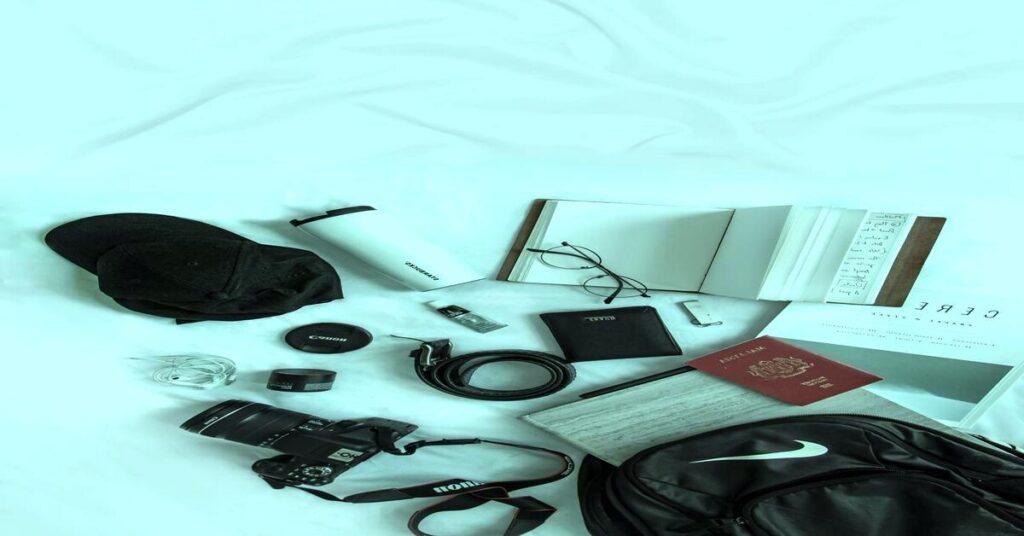
Essential Solo Travel Tools That Make Trips Easier
Sometimes making friends while traveling alone isn’t just about confidence-it’s also about minimizing small stressors that make social moments feel heavier than they need to. These tools keep you organized, calm, and more available to connect.
1) Universal Travel Adapter
A reliable travel adapter removes one of the most annoying little frictions of being in a new country.
When your phone, charger, and essentials work without hassle, you stay mentally focused and ready to meet new people.
2) Noise-Reducing Earplugs
For introverts or those sensitive to noise, earplugs help you recharge between social moments, rather than feeling drained all day.
This reset makes you more open and energetic later.
3) Anti-Theft Crossbody Bag
A secure day bag keeps your valuables safe in cafés, hostels, stations, and crowded spaces.
Less worrying means you can stay present, enjoy your surroundings, and engage more easily with new people.
4) Compact Portable Charger
Phone battery anxiety can quietly make solo travel stressful.
A slim, portable charger keeps you connected when navigating, sharing moments, or staying reachable.
5) Travel Journal
A good journal helps process emotions on quieter days, turning moments of loneliness into reflection instead of self-doubt.
Perfect for documenting memories and personal growth.
Final Thoughts on How to Make Friends While Traveling Alone
Making friends while traveling alone does not mean becoming the loudest, funniest, or most outgoing person in every room. Most of the time, it means becoming more open, more consistent, and less hard on yourself.
Some travel friendships happen instantly. Some need a second interaction. Some trips stay quieter than expected. But connection often starts the moment you stop trying to do it perfectly and start allowing small, normal moments to happen.
If you have been wondering how to make friends while traveling alone, the answer is usually not to become someone else. It is to make it easier for the real version of you to connect in the right places, at the right pace, without turning every conversation into pressure.
FAQs About How to Make Friends While Traveling Alone
1. Is it easy to make friends while traveling alone?
It can be, but it usually gets easier once you stop expecting every conversation to become an instant friendship. Low-pressure interactions often lead to the best travel connections.
2. Where do solo travelers meet people most naturally?
Walking tours, hostels, cafés, cooking classes, day trips, and repeat-visit spaces are some of the easiest places to meet people while traveling alone.
3. How do introverts make friends while traveling alone?
Introverts often do best in quieter, lower-pressure settings where one-on-one conversation feels more natural. They usually connect more deeply once the first interaction begins.
4. What should I do if I feel lonely while traveling alone?
Try not to judge the whole trip by one quiet day. Loneliness can happen even on a meaningful solo trip, and sometimes one small interaction is enough to shift how the experience feels.
Pingback: Solo Travel Budget Tips: Save Big & Explore Stress-Free