
Solo travel safety tips for first-time travelers to avoid scams, theft, and risky mistakes with smarter habits, gear, and safer planning, completely safely.
Solo travel can feel exciting and intimidating at the same time. Many first-time travelers worry about theft, scams, unsafe situations, and simple mistakes that can ruin an otherwise great trip. The good news is that solo travel is often much safer than people imagine when you build the right habits before you leave.
Most travel problems do not happen because someone is “unlucky.” They usually happen because of predictable situations like arriving too late, keeping valuables in easy-to-reach pockets, trusting the wrong person too quickly, or getting distracted in crowded tourist areas. That is why the smartest solo travel safety tips are not about fear. They are about creating a simple personal safety system that helps you stay alert, organized, and harder to target.
Solo travelers can follow this guide to stay confident, avoid pickpockets, protect valuables, reduce scam risk, and move through unfamiliar places more safely without turning the trip into a stressful experience.
Is Solo Travel Safe for First-Time Travelers?
Yes, solo travel can be safe for first-time travelers when you approach it with realistic awareness and simple safety habits. The biggest mistake many beginners make is assuming travel safety depends only on the destination. In reality, your routines, decisions, timing, and awareness often matter more than the country itself.
A lot of first-time solo travelers picture the worst-case scenario before they even leave. They worry about being alone in an unfamiliar place, getting lost, or becoming an easy target. Those fears are understandable, but most common travel risks are not random. They are predictable and preventable. Theft, distraction scams, transport confusion, and poor planning are far more common than dramatic danger stories people imagine online.
Which one of the best solo travel safety tips for beginners is to focus less on fear and more on behavior? If you avoid risky arrival times, stay aware in busy public places, keep your essentials organized, and move with purpose, you reduce a huge amount of unnecessary risk. Solo travelers who stay prepared often travel more carefully than groups because they pay closer attention to what is happening around them.
Another helpful mindset shift is understanding that safety is not about acting paranoid. It is about building calm habits that work in almost any destination. Knowing where your passport is, keeping emergency contacts easy to reach, using secure bags, and avoiding obvious tourist mistakes can make solo travel feel much more manageable.
Is Solo Travel Safe in the USA and UK?
Solo travel is generally safe in both the USA and the UK for first-time travelers, but the experience depends heavily on how you manage common travel risks. Most solo travelers in these countries are not dealing with constant danger. They are far more likely to run into practical issues like theft, transport confusion, poor neighborhood choices, nightlife risks, or tourist-targeted scams.
In the USA, safety can vary more noticeably from one city or neighborhood to another. A downtown tourist area may feel busy and comfortable during the day, but become much less predictable late at night. Large cities, transport hubs, entertainment districts, and poorly planned arrivals can create stress for beginners. That does not mean solo travel in the USA is unsafe. It means route planning, arrival timing, and neighborhood awareness matter.
The UK is often considered easier for first-time solo travelers because public transport can feel more accessible in many places, but that does not remove risk. Pickpocketing, phone theft, overconfidence in crowded city centers, and getting too relaxed in familiar-looking environments can still cause problems. Tourist-heavy areas, nightlife zones, and train stations often require more awareness than people expect.
One of the most useful solo travel safety tips for the USA and UK is to avoid treating “developed” destinations as automatically risk-free. Many beginners lower their guard too much in places that feel modern and easy to navigate. In reality, theft and scam risks often increase when travelers look distracted, tired, overconfident, or unfamiliar with the area.
If you are traveling alone in either country, the safest approach is to think in patterns rather than stereotypes. Tourist zones, crowded transport areas, isolated late-night routes, and unfamiliar neighborhoods deserve more attention than broad assumptions about an entire country.
Essential Solo Travel Safety Tips for Beginners
The best solo travel safety tips are usually the simplest ones. You do not need a complicated routine to travel safely alone. You need a few smart habits that reduce your chances of becoming an easy target or getting stuck in preventable situations.
Before booking your trip, it also helps to check official travel advisories for your destination.
Share Your Plans without Over-sharing Publicly
One of the smartest solo travel safety habits is making sure at least one trusted person knows your rough plans. That does not mean giving someone a minute-by-minute schedule. It means sharing your flight details, hotel name, general itinerary, and expected check-in times.
This small habit can make a big difference if your phone dies, your plans change unexpectedly, or you stop responding longer than usual. It also gives you a layer of accountability and peace of mind, especially during your first solo trip.
At the same time, avoid sharing your exact live location publicly on social media. Posting real-time hotel names, train platforms, or “traveling alone tonight” updates can expose more information than you realize. A safer habit is to post after you leave a location rather than while you are still there.
Avoid Risky Arrival Times and Unfamiliar Transfers
A lot of travel stress starts the moment you land or arrive. Late-night arrivals, confusing transport connections, and unfamiliar neighborhoods can make even safe destinations feel uncomfortable. One of the best travel safety tips for solo travelers is to reduce decision-making when you are tired.
If possible, aim to arrive during daylight or earlier evening hours, especially on your first day. Pre-save your hotel address, know your route in advance, and have a backup plan in case transport changes. It is much easier to stay calm and aware when you are not trying to figure everything out while carrying luggage in a new place.
Even simple things like knowing which train exit to use or where your pickup point is can reduce vulnerability. Confused travelers tend to stop suddenly, stare at phones, expose wallets, and attract the wrong kind of attention.
Stay Aware Without Looking Lost
Good situational awareness is one of the most powerful solo travel safety tips for first-time travelers. You do not need to look suspicious or tense. You need to avoid broadcasting distractions.
Try not to walk while deeply focused on your phone, maps, or messages. If you need to check directions, step to the side in a calmer area rather than ending in the middle of a busy walkway. Keep your head up, move with intention, and stay aware of who is too close or acting strangely around you.
Looking confident does not mean pretending you know everything. It means avoiding habits that make you more easily isolated or distracted. Pickpockets and scammers often look for travelers who seem overloaded, visibly confused, or too absorbed in their devices to notice what is happening around them.
Keep Emergency Essentials Easy to Reach
Every solo traveler should have a small “safety core” that is easy to access. That includes your phone, some charged battery power, one backup payment option, emergency contact details, and any transport or accommodation info you may need quickly.
If your bag is too disorganized, even small issues become harder to handle. You do not want to dig through multiple compartments to find a card, local address, or charging cable in a stressful moment.
A practical setup is often better than an expensive one. The goal is not to carry everything. The goal is to make sure the few things you truly need are always available when plans shift unexpectedly.
How Pickpockets Actually Target Solo Travelers
Pickpockets rarely rely on speed alone. They usually rely on distraction, poor bag placement, crowded conditions, and predictable tourist behavior. Understanding how they work is one of the most useful solo travel safety tips because prevention starts before you even notice a problem.
Distraction Tricks Work Better Than Force
Most pickpocketing is not dramatic. It often feels like a harmless interruption. Someone spills something near you, asks for directions, crowds your path, points at your clothes, or tries to get your attention while someone else moves in.
These situations are effective because they interrupt your focus. The moment you shift attention to the distraction, your phone, wallet, or bag becomes easier to access. Solo travelers are especially vulnerable because they are managing their own luggage, navigation, and surroundings without anyone else watching their back.
Busy Transit Areas Are Easy Theft Zones
Train stations, airport queues, bus stops, metro entrances, and escalators are classic theft zones because people are naturally distracted there. Travelers are checking tickets, dragging luggage, reaching for phones, or trying to move quickly through tight spaces.
That is why one of the best solo travel safety tips is to treat transitions as high-alert moments. Every time you are boarding, exiting, scanning, lifting luggage, or standing in line, your awareness should go up rather than down.
Phones, Wallets, and Outer Pockets Are Easy Targets
One of the biggest mistakes travelers make is keeping important items in easy-access places. Back pockets, open tote bags, loose backpack side pockets, jacket pockets, and half-zipped pouches are all invitation points.
If someone can reach it in one smooth movement, it is not secure enough for travel. Many thefts happen because the traveler unintentionally made the item easy to take.
Solo Travelers Often Look Easier to Isolate
Traveling alone does not automatically make you unsafe, but it can make you look easier to approach. A solo traveler managing luggage, standing alone outside a station, or trying to decode a ticket machine often appears more vulnerable than someone moving confidently with a plan.
That is why awareness matters more than fear. The goal is not to avoid every interaction. The goal is to recognize when someone’s timing feels too convenient, too close, or too distracting.
How to Avoid Theft in Crowded Tourist Areas
Crowded tourist areas can feel exciting, but they are also one of the easiest places for small thefts to happen. When everyone is taking photos, checking maps, and moving shoulder to shoulder, it becomes easier for someone to slip close without being noticed.
Wear Your Bag the Smart Way
A crossbody bag worn in front of your body is usually one of the easiest and safest setups for day-to-day solo travel. Bags carried behind your back or hanging loosely off one shoulder are easier to open or tug without you noticing quickly.
Keep zippers facing inward when possible and avoid letting your bag sit behind you in packed spaces. A secure bag does not help much if you wear it least securely.
Never Store Important Items in Easy-Access Pockets
Important items should not live in outer compartments just because they are “convenient.” That convenience works both ways. If it is easy for you to reach, it is often easy for someone else to reach too.
Your passport, main wallet, primary phone, and backup cash should stay in more protected places rather than visible or exposed compartments. That is one of the simplest ways to avoid theft in crowded tourist areas.
Use Your Phone Carefully in Public
Phones are one of the most commonly targeted travel valuables because they are visible, valuable, and often used carelessly in busy places. Many travelers hold phones loosely while checking directions, taking selfies, messaging, or standing near transport doors.
If you need to use your phone in a busy area, keep a stronger grip and stay aware of your surroundings. Avoid using it while walking unthinkingly through crowds or standing near open train or bus doors where quick grab-and-run thefts are easier.
Know When a Crowd Feels Wrong
Not every crowd is risky, but unusual crowd behavior is worth noticing. Sudden clustering, unnatural closeness, aggressive bumping, or strange urgency can all be warning signs.
If a situation feels off, trust the pattern rather than talking yourself out of it. Move to a calmer space, reposition your bag, and check your belongings discreetly. Small early reactions often prevent bigger problems.
How to Keep Your Valuables Safe While Traveling Alone
Keeping valuables safe while traveling is less about hiding everything and more about reducing exposure. Most losses happen because too many important items are carried together, stored visibly, or handled carelessly in public.
Split Cash, Cards, and Backup Money
Which one of the best solo travel safety tips is never to keep all your money and cards in one place? If your wallet disappears and it contained everything, a small theft instantly becomes a major travel problem.
A smarter setup is to carry one main payment method for the day while keeping a backup card and some emergency cash stored separately. This way, even if something goes wrong, your trip does not stop.
Only Carry What You Need That Day
You do not need every bank card, every ID, and every travel document with you on every outing. Carrying less lowers your risk and simplifies your day.
Before leaving your accommodation, ask yourself what you actually need for the next few hours. The fewer high-value items you carry unnecessarily, the fewer things that can go missing.
Keep High-Value Items Out of Sight
Visible expensive items attract attention faster than most travelers realize. Cameras, designer accessories, premium phones, jewelry, and open laptops can all shift how you are perceived in public.
That does not mean you must hide everything obsessively. It means avoid making valuable items part of your public display. Use them when needed, then put them away cleanly and quickly.
Use Hotel or Accommodation Storage Wisely
A hotel room or rental does not automatically mean everything inside is “safe enough.” Basic accommodation security still matters. Use available safes when appropriate, but do not assume every storage option is equally reliable.
A good habit is to keep your most important backups organized in one secure place rather than scattered across your room. The goal is not just theft prevention. It is also making sure you can find critical items fast if you need them.
How to Protect Your Passport While Traveling Alone
Your passport is one of the few travel items that can create major stress if lost or stolen, so it deserves a smarter strategy than simply dropping it into your bag and hoping for the best.
Carry It Only When You Truly Need It
One of the most overlooked solo travel safety tips is that you do not always need to carry your passport with you all day. In many situations, carrying a different form of ID or a secure copy may be enough, depending on local rules and your specific activities.
If you do not need your passport for that outing, leaving it securely stored can be safer than carrying it everywhere by default.
Keep a Digital and Printed Backup
A passport scan stored securely online and one printed backup copy can save you time and stress if the original goes missing. These backups will not replace the passport itself, but they can make recovery and reporting much easier.
That is one of those simple travel safety habits people often skip because they assume nothing will happen. It takes very little effort and can become incredibly valuable later.
Avoid “Convenient” But Unsafe Storage
A passport stored in a front backpack pocket, open handbag compartment, or visible pouch is not really protected. Convenience is useful only if it does not weaken security.
The safest storage is usually whichever option makes the passport harder to access casually, less visible in public, and easier for you to monitor consistently.
Know What to Do If It Goes Missing
If your passport goes missing, acting quickly matters more than panicking. Know in advance how to contact your embassy or consulate, where your backup copies are stored, and what details you would need to provide.
A small amount of preparation before the trip can make a stressful situation much easier to manage if it ever happens.
Common Travel Scams Solo Travelers Should Know
Scams often work because they feel normal at first. They usually begin with something that looks helpful, friendly, urgent, or routine. Knowing the patterns behind them is one of the best travel safety tips for solo travelers.
Fake Taxi and Transfer Scams
Transport scams are common because travelers are often tired, carrying luggage, and focused on getting somewhere quickly. That creates the perfect setup for overcharging, route manipulation, fake “official” drivers, or no-meter rides.
One of the smartest solo travel safety habits is to decide your transport plan before you arrive, rather than improvising while standing outside a station or airport.
“Friendly Stranger” Setups
Not every friendly stranger is a scammer, but solo travelers should stay alert when help, attention, or invitations feel too fast or too personal. Overfriendly behavior can sometimes be used to lower your guard or move you into a less controlled situation.
That is especially important in nightlife zones, transit areas, or anywhere you are visibly new and alone.
ATM, Ticket Machine, and Payment Distraction Scams
Any moment involving your money, card, or PIN deserves extra attention. Someone offering “help” at a machine, standing too close, or creating confusion while you are paying may be doing more than being polite.
If you feel pressured, crowded, or distracted while handling money, pause and reset. The extra few seconds are worth it.
Restaurant and Bill Padding Scams
Tourist-focused restaurants in busy areas can sometimes rely on confusion rather than direct theft. Hidden fees, unclear pricing, item substitutions, or inflated bills are all small but common travel frustrations.
The easiest protection is simple awareness. Check pricing, keep receipts when needed, and do not feel awkward reviewing the bill before paying.
Best Travel Safety Gear worth Carrying
The best travel safety gear is not the most expensive gear. It is the gear that solves common travel problems without making your trip more complicated. A few well-chosen items can make solo travel easier, more organized, and less vulnerable to theft or stress.
Anti-Theft Backpack
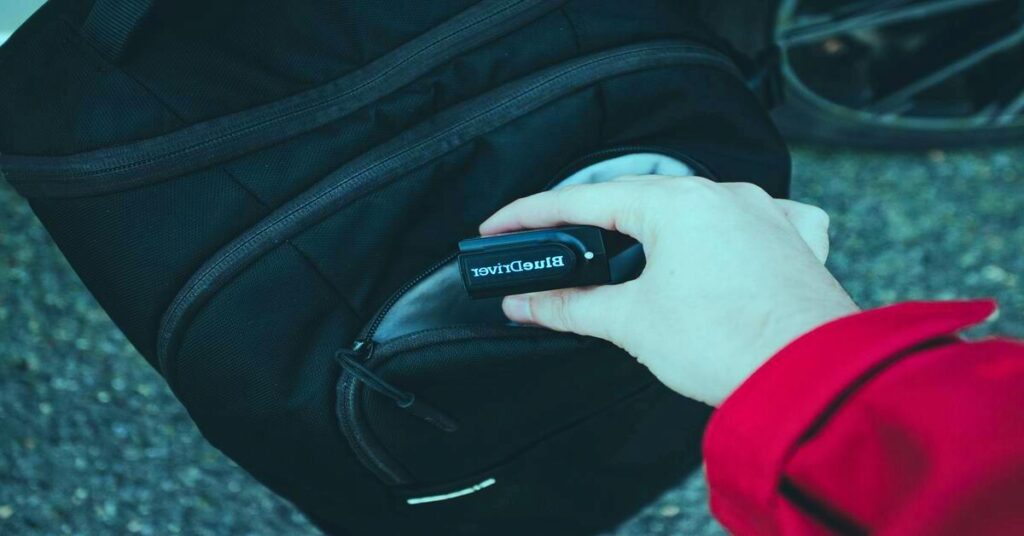
A good anti-theft backpack can help reduce casual access to your belongings, especially in transit zones, busy streets, and tourist-heavy areas. Look for features like lockable zippers, hidden compartments, slash-resistant materials, and smarter pocket placement.
That is especially useful if you carry tech, documents, or multiple daily essentials while moving between stations, airports, or city centers.
Many solo travelers prefer anti-theft backpacks for safe travel because they make it harder for thieves to access valuables in crowded places.
Crowded tourist areas make bags easier to target, especially when pockets and zippers stay exposed. A secure design can make valuables much harder to access.
RFID Wallet
An RFID wallet can keep cards organized and reduce unnecessary exposure when you are paying in public. While not every traveler needs one, it can be a simple upgrade if you want a more secure, travel-friendly wallet setup.
The biggest benefit is often organization and control rather than just one security feature.
A slim RFID wallet can help keep cards more organized and easier to manage while moving through airports, stations, and public spaces.
Hidden Money Belt
A hidden money belt can be useful for backup cash, spare cards, and copies of important items, especially during transit days or higher-risk travel moments. It is not ideal for constantly accessing things, but it can work well as a secondary layer rather than your main everyday wallet.
A travel money belt can be useful for storing backup cash and spare cards more discreetly during flights, transfers, or crowded travel days.
Portable Door Lock
A portable door lock is one of the simplest hotel room safety tools solo travelers can carry. It adds peace of mind in hotels, guesthouses, or rentals where you want an extra layer of control from inside the room.
That is especially appealing to first-time solo travelers who sleep better when they feel physically more secure.
A portable door lock added an extra layer of room security and peace of mind for solo travelers staying in hotels or rentals.
Luggage Tracker
A luggage tracker can be useful for bags that move separately from you or for travelers who want extra reassurance during flights and transfers. It is not a substitute for keeping essentials with you, but it can make it easier to track where your belongings are.
A luggage tracker helps travelers keep better track of checked bags and travel gear during busy flights and transfers.
Crossbody Anti-Theft Day Bag
For daily sightseeing and city walking, a secure crossbody anti-theft day bag is often more practical than a large backpack. It keeps essentials closer to your body, easier to monitor, and harder to access casually in crowded places.
A smaller crossbody day bag is often easier to monitor than a backpack when walking through busy city streets and tourist areas.
Solo Travel Safety Mistakes First-Time Travelers Make
A lot of solo travel safety issues come from small habits rather than big decisions. The good news is that these errors are easy to avoid once you know what to watch for.
Carrying Everything in One Bag
Keeping all your money, cards, passport, and backup essentials together may feel organized, but it creates a single point of failure. If that one bag disappears or becomes inaccessible, your whole trip becomes harder instantly.
Trusting the Wrong Person Too Quickly
Many travel problems begin with a moment that feels socially awkward to question. A stranger offering unexpected help, a driver changing the plan, or someone creating pressure can all seem minor until they are not.
Being polite does not require abandoning your judgment.
Looking Distracted in Public
Travelers who stop suddenly in crowded areas, leave phones exposed, or stay too absorbed in navigation often become easier targets without realizing it. Awareness is not about paranoia. It is about not handing out free opportunities.
Posting Real-Time Locations Publicly
Sharing your trip online is normal, but broadcasting your exact location while you are still there can reveal more than you intend. Delayed posting is usually the safer habit.
Ignoring Small Warning Signs
Many travel issues feel “off” before they become obvious. A crowd that closes too quickly, a stranger who insists too much, or a route that suddenly feels isolated is worth taking seriously.
One of the most useful solo travel safety tips is to respect early discomfort instead of rationalizing it away.
Simple Solo Travel Safety Checklist Before You Leave
A short safety checklist before your trip can prevent a surprising number of avoidable problems. It does not need to be complicated. It just needs to cover the basics that matter most.
Documents
- Passport checked and stored safely.
- Digital passport copy saved securely
- Printed backup copies available
- Emergency contacts saved
Money and Cards
- Main card ready
- Backup card packed separately
- Emergency cash is split into different locations
- Wallet setup simplified
Phone and Connectivity
- Phone fully updated
- Charging cable and power bank packed
- Offline maps downloaded
- Important addresses saved
Bag and Security Setup
- Day bag chosen carefully
- Important items moved out of outer pockets
- Zippers and compartments checked
- Luggage labeled properly
Emergency Prep
- Arrival route confirmed
- The accommodation address is easy to access
- Trusted contact informed
- Backup transport option considered
FAQs: About Solo Travel Safety Tips
1. Is solo travel safe for beginners?
Yes, solo travel can be safe for beginners when you plan well, stay aware, avoid obvious risks, and use practical safety habits instead of relying on luck.
2. How do solo travelers stay safe?
Solo travelers usually stay safe by staying organized, avoiding distraction, protecting valuables, planning transport carefully, and recognizing common scam or theft patterns early.
3. How do I avoid pickpockets while traveling alone?
Wear your bag securely, avoid easy-access pockets, stay alert in crowded spaces, and be cautious when strangers create a distraction or urgency around you.
4. Where should I keep my passport while traveling?
Keep your passport in the most secure place you can monitor consistently, and avoid storing it in outer pockets or easy-access compartments.
5. What is the safest way to carry money while traveling?
The safest way is to split your money between a main daily wallet, a backup card, and separate emergency cash so one loss does not ruin the trip.
6. Is solo travel safe in the USA?
Yes, solo travel in the USA can be safe with smart planning, especially when you stay aware in cities, transport hubs, nightlife areas, and unfamiliar neighborhoods.
7. Is solo travel safe in the UK?
Yes, solo travel in the UK is generally manageable for beginners, but theft, phone snatching, and crowded tourist areas still require attention.
8. What travel safety gear is actually worth buying?
The most useful options are usually an anti-theft backpack, an RFID wallet, a hidden money belt, a portable door lock, a luggage tracker, and a secure crossbody day bag.
Final Thoughts
The best solo travel safety tips are not about being scared of the world. They are about becoming harder to exploit, harder to distract, and easier to recover if something goes wrong. That is a much more realistic and useful way to think about travel safety.
When you travel alone, confidence does not come from pretending nothing can happen. It comes from knowing you have a smart system in place. If you protect your valuables, avoid obvious theft setups, stay alert in crowded places, and prepare for common travel problems before they happen, solo travel becomes much less stressful and much more enjoyable.
For first-time travelers, that mindset shift matters more than any one gadget or hack. Safety is rarely about doing one big thing right. It is usually about doing many small things consistently well.